

Banner Image

AMD - Macular Degeneration Treatment in Switzerland

AMD is the leading cause of irreversible vision loss in seniors in Switzerland. With early screening and modern treatments, it is possible to slow or stop its progression.

Introduction + Causes & Risk Factors

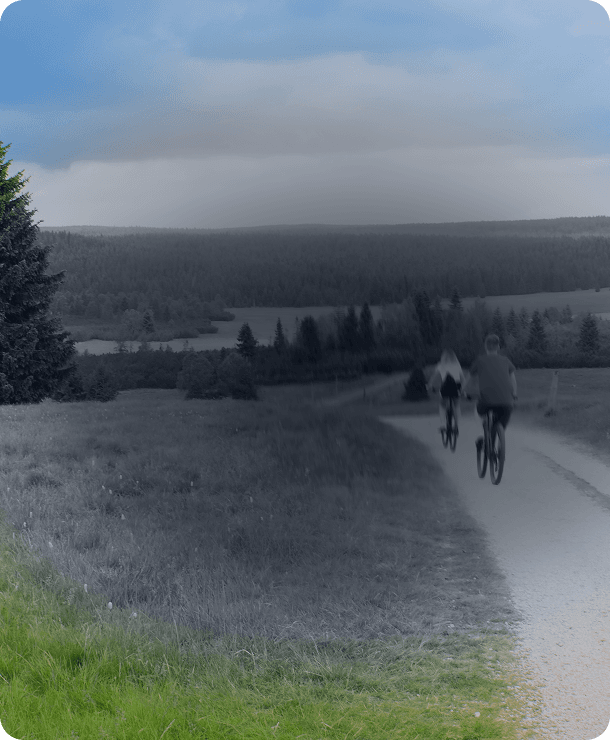
The macula is a small area located at the centre of the retina, at the back of the eye. It is responsible for seeing fine details and colours precisely: reading, driving, recognising faces. When this area deteriorates with age, central vision becomes blurred or distorted, while peripheral vision remains intact.

AMD is a chronic retinal disease that progressively deteriorates the macula. It is linked to ageing and is made worse by smoking, genetic predisposition or cardiovascular disorders.

Causes of AMD

  • tick-markAgeing (main cause)
  • tick-markSmoking: a major risk factor that considerably worsens the disease
  • tick-markGenetic and hereditary predisposition
  • tick-markCardiovascular disorders: high blood pressure, cholesterol
  • tick-markExcessive UV exposure without protection
  • tick-markDiet poor in antioxidants
Risk factors
In Switzerland, AMD affects:

Without treatment: progressive and irreversible

  • tick-mark 1 in 100 people at age 65
  • tick-mark 12 in 100 people at age 80
Which form of AMD do you have?

The disease is hereditary and far more severe in smokers. Early detection and treatment are crucial to increasing the likelihood of maintaining good vision and independence throughout life.

cataract eye image≈90% of cases — Most common form

Dry AMD

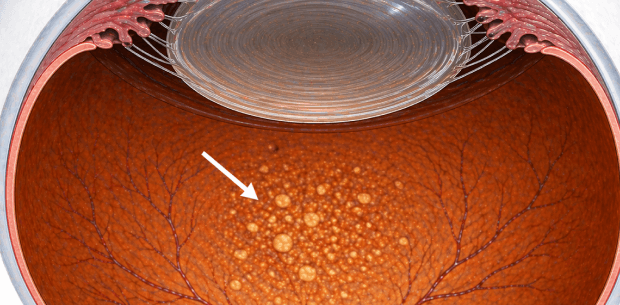
The most common and least aggressive form. It progresses slowly through the accumulation of deposits under the retina (drusen) and gradual thinning of the macula. It can, in some cases, develop into the wet form.

cataract eye image≈10% of cases — Most severe form

Wet AMD

The most severe and fastest-progressing form. Characterised by the growth of abnormal blood vessels beneath the macula. These vessels leak fluid or blood, causing oedema and scarring, leading to rapid vision loss if left untreated.

SYMPTOMS & INDICATIONS

How to recognise AMD?

Early signs to watch for from age 50:

How to recognise AMD?
  • Blurred or distorted vision
  • Straight lines that appear twisted or wavy
  • Dark spot or blurred area in the centre of the visual field
  • Need for brighter light to read
  • Difficulty adapting from dim to bright light
  • Difficulty recognising faces

The earlier the diagnosis, the more effective the treatment at preserving central vision and maintaining visual independence. Seek urgent advice if you notice sudden vision changes, distorted lines or a rapid drop in visual acuity.

OUR DIAGNOSIS

How do we diagnose AMD?

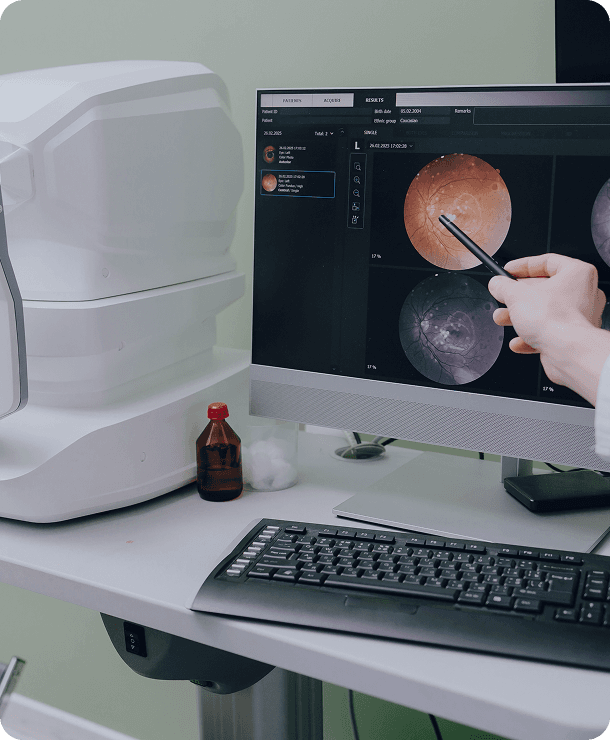
Early screening is essential from age 50. At the Oculus Clinic, we use the most advanced imaging technologies to accurately assess your macula.

How do we diagnose AMD?
  • Amsler grid — visual distortion test (also usable at home)
  • Fundus examination — direct observation of the macula
  • OCT (optical coherence tomography) — precise, painless retinal scan
  • Angiography — visualisation of retinal blood vessels
OUR SPECIALISTS

An experienced team of doctors and consultants

Team of physicians and consultants.

doctor-image

Dr Chokri Lamloum

FMH Specialist in ophthalmology

ophthalmology
doctor-image

Dr Sabrina Chebli

FMH Specialist in ophthalmology

ophthalmology
doctor-image

Dr Vlasios Loukopoulos

FMH Specialist in ophthalmology

ophthalmology
doctor-image

Dr Arnaud Blommaert

FMH Specialist in ophthalmology

ophthalmology
doctor-image

Dr Mohamed El Wardani

FMH Specialist in ophthalmology

ophthalmology

Understanding AMD and its treatments

OUR TREATMENTS

AMD treatments we offer

Treatment depends on the type of AMD. For the dry form, there is no curative treatment but measures slow its progression. For the wet form, anti-VEGF intravitreal injections are the gold-standard treatment.

Prevention and slowing

Treatment for dry AMD

  • iconAREDS supplements: vitamins C, E, zinc, lutein
  • iconRisk reduction of up to 25%
  • iconDiet rich in green vegetables
  • iconStopping smoking and UV protection
  • iconRegular ophthalmological follow-up
Anti-VEGF intravitreal injections

Treatment for wet AMD

  • iconMedication injected directly into the eye
  • iconUnder local anaesthetic — painless
  • iconBlocks the growth of abnormal blood vessels
  • iconProtocol: monthly injections then spaced ou
  • iconGoal: stabilise or even improve vision
ANTI-VEGF INJECTIONS

How do intravitreal injections work?

Anti-VEGF injections are now the reference treatment for wet AMD. They block the proteins that stimulate the growth of abnormal blood vessels beneath the retina.

Procedure

The injection is performed as an outpatient procedure under local anaesthetic drops. It takes a few minutes. The medication is injected into the vitreous of the eye with a fine needle. The procedure is painless and requires no hospitalisation.

Treatment protocol

Initial phase: 3 consecutive monthly injections to stabilise the disease. Maintenance phase: injections spaced out according to progression (every 6 to 12 weeks). Regular OCT follow-up allows the injection frequency to be adapted.

HOW DOES THE CARE PATHWAY WORK?

Your care pathway at the Oculus Clinic

TEach patient receives personalised follow-up adapted to the stage of their disease and their medical situation.

01

Screening and initial consultation

Complete retinal examination: fundus, OCT, Amsler grid. Screening recommended from age 50, or on the appearance of symptoms (blurred vision, distorted lines).

clock45 min
02

Diagnosis and AMD type determination

The doctor determines the type of AMD (dry or wet) and its stage. A personalised treatment plan is established.

clock45 min
03

Treatment initiation

Dry AMD: nutritional advice and AREDS supplements. Wet AMD: anti-VEGF injections, 3 initial monthly sessions then spaced out according to progression.

clock45 min
04

Long-term follow-up

Regular OCT check-ups to assess treatment response and adjust injection frequency. Collaboration with low vision specialists if necessary.

clock45 min

Recovery & aftercare

What happens after the injections?

Immediately after

The injection takes a few minutes. You can return home immediately. Slight redness or a foreign body sensation may persist for a few hours.

In the following days

Antibiotic drops to be instilled for a few days. Avoid swimming and eye make-up. Contact the clinic in case of intense pain or sudden vision loss.

Long-term follow-up

Regular OCT check-ups to adapt injection frequency. Personalised follow-up by the Oculus team with advanced imaging technologies.

SAFETY & RISKS

What you need to know

Intravitreal injections are generally well tolerated. Their efficacy is established: they stabilise, and sometimes improve, vision in many patients.

Category

Detail

Common mild effects

Redness, foreign body sensation, slight discomfort. Disappear within 24–48 hours.

Rare risks

Infection (endophthalmitis): < 0.05%. Retinal detachment, increased eye pressure. Very rare.

Dry AMD

No injection required. AREDS supplements have no significant side effects.

Without treatment (wet AMD)

Rapid and irreversible loss of central vision within weeks to months.

MONITORING & PREVENTION

How to prevent and monitor AMD?

monitoring and prevention image
Screening from age 50

Regular screening examinations recommended from age 50. If there is a family history, follow-up is recommended from age 45.

monitoring and prevention image
Diet and supplements

Balanced diet rich in antioxidants and omega-3. AREDS supplements (vitamins C, E, zinc, lutein) recommended from certain stages.

monitoring and prevention image
Healthy lifestyle

Complete cessation of smoking, UV protection (suitable sunglasses), control of cholesterol and blood pressure.

REQUEST COSTS & RESOURCES

AMD treatment coverage in Switzerland

State of the art laser surgery room

In Switzerland, AMD treatment is generally covered by basic health insurance (LAMal), subject to your deductible. We recommend checking with your insurer for your exact coverage..

  • tick-mark Screening consultations — to verify with your insurer
  • tick-mark Anti-VEGF injections — to verify with your insurer
  • tick-mark AREDS supplements — generally at the patient's cost
  • tick-mark OCT and imaging follow-up — to verify with your insurer

Contact us with any questions. We support you in your administrative processes.

FREQUENTLY ASKED QUESTIONS

Your questions about AMD

Find answers to the questions our patients ask most often before booking an appointment.

Dry AMD progresses slowly and represents 90% of cases. Wet AMD, rarer (10%), progresses rapidly but can be treated effectively with anti-VEGF injections.

No, but current treatments can slow or stabilise the disease, and sometimes improve vision. Regular follow-up is essential.

No, they are performed under local anaesthetic drops. Most patients feel only slight pressure. The procedure takes a few minutes.

Often yes, but the progression may differ between the two eyes. Regular follow-up of both eyes is essential even if only one is affected.

A balanced diet, stopping smoking, sun protection and regular ophthalmological follow-up from age 50 are the best preventive measures.

The initial protocol includes 3 consecutive monthly injections. The frequency is then adapted according to the treatment response, generally every 6 to 12 weeks.

Live Booking

You Deserve the Highest Standard of Care

Book your macular assessment appointment and receive personalised follow-up by our specialists.

Book an appointmentwhite arrow