
Réduction glandulaire
 Ablation du volume glandulaire en excès
- Quantité retirée définie pré-opératoire
- Les deux seins traités en même temps
- Analyse anatomopathologique systématique



Un volume mammaire trop important peut entraîner douleurs du dos, gêne au sport et mal-être psychologique. La réduction mammaire permet de retrouver une poitrine harmonieuse et une qualité de vie améliorée.
Les seins présentant un volume trop important, souvent associé à une ptose, entraînent des conséquences physiques (douleurs du dos et des épaules, gêne sportive, marques de bretelles) et psychologiques (complexes, difficultés à s’habiller).
 Douleurs chroniques du dos, des épaules et du couIrritations cutanées sous la poitrineDifficulté à pratiquer des activités sportivesMarques profondes des bretelles de soutien-gorgeComplexes et difficulté à trouver des vêtements adaptés Douleurs dorsales documentées Irritations cutanées chroniques Volume important à retirer Avis du médecin traitant nécessaire A vérifier avec votre assurance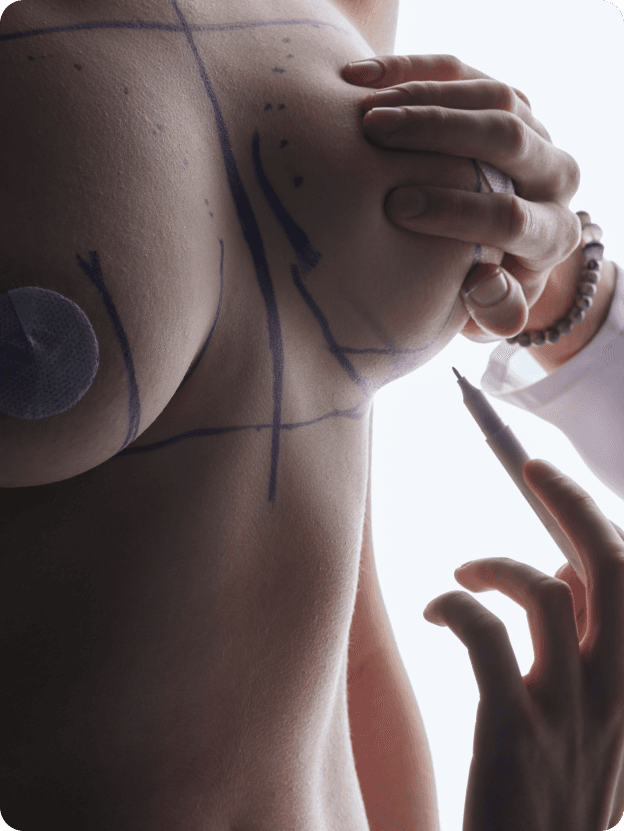
Technique de référence pour les réductions importantes. Permet un remodelage complet et le repositionnement de l’aréole. Cicatrice bien dissimulée sous le sein.
Pour les réductions modérées. Cicatrice réduite autour de l’aréole et verticale sous le sein. Résultat esthétique optimal.
La correction d’une asymétrie entre les deux seins peut être effectuée simultanément. Objectif : des seins symétriques, bien proportionnés et harmonieux.
Technique mini-invasive possible dans certains cas (volume modéré sans ptose). Cicatrices minimes, récupération plus rapide.
Vous pouvez envisager une réduction mammaire si vous souffrez de :

Une consultation confirmera votre indication et déterminera la meilleure technique opératoire.
La consultation préopératoire évalue votre indication, choisit la technique adaptée et vous informe précisément du déroulement et des suites.

Spécialiste FMH en chirurgie plastique et esthétique
Spécialiste FMH en chirurgie plastique et esthétique
NOS TRAITEMENTS
L’intervention se réalise sous anesthésie générale avec un retour à domicile le jour même. Elle dure entre 2 et 3 heures selon la technique utilisée.
Ablation du volume glandulaire en excèsQuantité retirée définie pré-opératoireLes deux seins traités en même tempsAnalyse anatomopathologique systématiqueLa technique est choisie lors des consultations pré-opératoires selon le volume à réduire, la qualité de la peau et la position de l’aréole.
La technique la plus utilisée. Le pédicule supérieur vascularise l’aréole. Permet des réductions importantes avec un beau résultat esthétique.
Idéale pour les poitrines très volumineuses. Résultat excellent avec préservation de la sensibilité.
Pour les réductions modérées. Cicatrice limitée autour de l’aréole et verticale sous le sein. Récupération plus rapide.
Indiquée pour les volumes modérés sans ptose. Cicatrices minimes, récupération rapide, idéale pour les jeunes patientes.
Chaque étape est organisée pour votre sécurité et votre confort.
01 Consultations pré-opératoires Bilan complet, choix de la technique, démarche de remboursement LAMal si applicable. Délai de réflexion obligatoire.
Anesthésie générale. Durée : 2 à 3 heures. Retour à domicile le jour même. Contrôle le lendemain.
Les seins sont déjà réduits et repositionnés plus haut. Douleurs gérées par les antalgiques. Instructions post-opératoires détaillées.
A 3 mois, la poitrine est moins bombée et les tissus assouplis. Résultat définitif à 6 mois.
RÉCUPÉRATION ET SOINS
Contrôle le lendemain. Port d’un soutien-gorge de contention fourni. Légers conforts gérés par les antalgiques.
Reprise des activités légères. Éviter le port de charges et le sport. Massage des cicatrices.
La poitrine s’assouplit. Résultat définitif à 6 mois. Soulagement des douleurs dorsales immédiat.
La réduction mammaire est une intervention sûre et bien maîtrisée. La grande majorité des patientes sont très satisfaites du résultat fonctionnel et esthétique.
Douleurs les premiers jours, tensions, œdème. Gérés par les antalgiques. Disparaissent en 2-3 semaines.
Hématome, infection, cicatrisation prolongée. Surveillance incluse.
S’estompent sur 12 à 18 mois. Massage et crème cicatrisante recommandés.
Soulagement immédiat des douleurs dorsales dans plus de 90 % des cas.

Massage quotidien avec crème cicatrisante dès J+21. Les cicatrices s’estompent progressivement sur 12 à 18 mois.

Continuez l’auto-examen mensuel de vos seins. Suivez les recommandations de dépistage selon votre âge.

La surveillance mammographique reste recommandée selon les guidelines suisses. Informez le radiologue de l’intervention.

La réduction mammaire peut être partiellement prise en charge par la LAMal dans certains cas médicalement justifiés..
Réduction esthétique — non remboursée par la LAMalRéduction mammaire — Dès 9000 CHF Réduction pour douleurs dorsales documentées — prise en charge partielle possible Consultation initiale — CHF 150 (déduits du traitement) Financement possible — à discuter lors de la consultationVotre chirurgien vous guidera dans les démarches auprès de votre assurance.
QUESTIONS FRÉQUENTES
Retrouvez ici les réponses aux questions que nos patients posent le plus souvent avant de prendre rendez-vous
Partiellement possible si les douleurs dorsales sont documentées et que le volume à retirer est suffisant. Votre chirurgien vous guidera dans la démarche.
Généralement après 6 semaines pour les activités légères. La natation et les sports de contact sont autorisés après 3 mois.
C’est possible dans certains cas, mais pas garanti. Les techniques préservent au maximum les canaux galactophôres. Signalez tout projet de grossesse à votre chirurgien.
Elles sont bien dissimulées et s’estompent progressivement. Bien suivies, elles deviennent discrètes après 12 à 18 mois.
Le résultat définitif est apprécié à 6 mois. Mais le soulagement des douleurs dorsales est immédiat dès le lendemain.
Prenez rendez-vous pour votre consultation chirurgicale et retrouvez le confort et la confiance que vous méritez.